
North Little Rock Residents by Era
Previous residents in North Little Rock leave different evidence in each period. Start with the source closest to the target year, then use the address, legal description, names, and dates to cross into the next record set. Ownership records are the most continuous local trail. Occupant sources are less complete but can name people who never held title.
| Source | Local years or era | Where held | Evidence it supplies |
|---|---|---|---|
| Recorder web index | 1994 to present | Pulaski County Clerk website | Transfers, liens, leases, parties, and recording details |
| Recorder scans and books | 1819 through 1993 | Courthouse research area | Historic title chain, plats, and legal descriptions |
| City directories | 1910 and 1911 examples verified; full shelf run unconfirmed | Roberts and Laman libraries | Named occupants or businesses by year and address |
| Federal census | Public through 1950 | NARA and library genealogy databases | Household members, relationships, address, and occupation |
| Sanborn atlas | 1892 volume verified | Library of Congress and local collections | Building footprint, materials, use, and street geography |
| North Little Rock permits | Surviving series; online start not stated | Planning or Arkansas FOIA | Project, applicant, contractor, valuation, and address |
| Obituary and probate | Newspaper and court-file eras | CALS, archives, and Circuit Clerk | Death, kin, heirs, estate action, and former residence |
For a recent North Little Rock address, begin with the parcel and online deed index. For earlier research, expect a courthouse appointment plus library work. The full run of local reverse directories has not been posted in an official shelf list, so confirm the title and year with staff.
Trace North Little Rock Past Residents
The backward title path starts at the Pulaski County Assessor. Save the current owner, parcel number, situs, mailing address, legal description, subdivision, lot and block, and any sale reference. Then move to the Pulaski County Real Estate Department. Its web search covers 1994 forward and includes party, document type, date, instrument number, and book or page modes.
- Search the current owner as grantee near the assessor's transfer date. Open the likely purchase deed.
- Match the deed's legal description to the parcel. Record the grantor, grantee, instrument number, date, and book or page.
- Search that grantor as an earlier grantee. Check spouse, trust, estate, and spelling variants.
- Repeat to the web cutoff. Do not treat a mortgage, release, or lien as a transfer.
- For older links, book the clerk's research computer and continue through index books, scans, plats, and microfiche.
- Grantor and grantee
- The party transferring an interest and the party receiving it.
- Chain of title
- The linked sequence of recorded land transfers.
- Legal description
- The land description that remains useful when a street name or number changes.
- Criss-cross directory
- A dated directory that works from address or telephone to the listed occupant.
The official Pulaski County real-estate page identifies the current online boundary and older-record route.
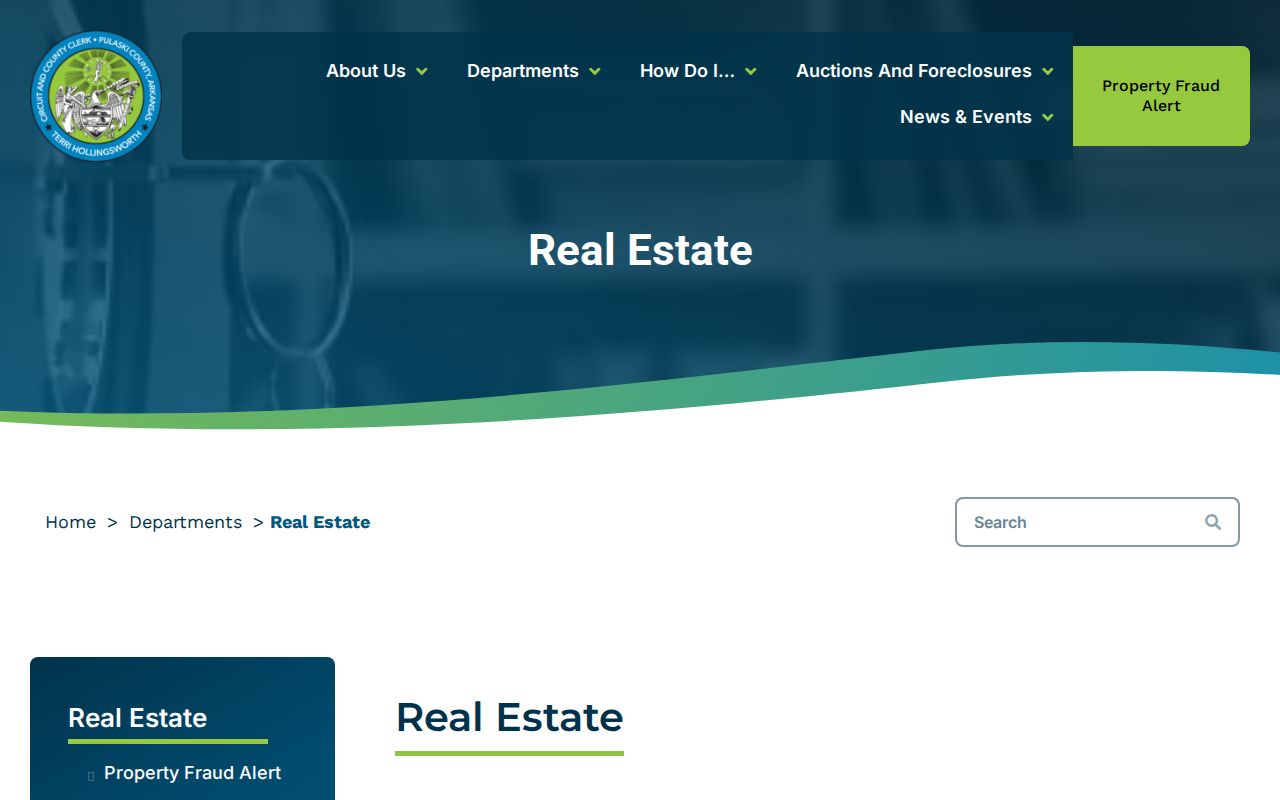
The index is the bridge from a known owner to the next earlier party, while the deed image provides the legal description needed to keep the same property in view.
North Little Rock Records Before 1994
The public website stops at 1994, but Pulaski County reports scanned land records back to 1819. That distinction matters for nearly every old North Little Rock address. Pre-1994 research normally moves to the Real Estate Department's courthouse research area at 401 W. Markham in Little Rock. Two public computers are available by online appointment Monday through Thursday in two-hour sessions at 8:15, 10:15, 12:15, or 2:15. The office ordinarily limits bookings to two per week and does not schedule them by phone or email.
Bring every citation gathered from later deeds. Book and page, instrument reference, grantor, grantee, and legal description reduce false matches. Work backward through grantor and grantee books, deed books, microfiche, plats, and scanned images. Call Real Estate at 501-340-8433 for current copy and research procedure, but use the live appointment calendar before travel because access can change.
Not online does not mean lost. The surviving scan base begins 175 years before the web index. That unusually deep local backfile makes a courthouse appointment the gateway to territorial and early-state owners.
Note: Preserve the exact image or volume citation so a later reader can verify each link in the title chain.
North Little Rock Resident Ownership Records
Previous residents and past owners form separate timelines. An assessor card names the assessed owner, not every occupant. A deed proves a recorded interest, not a move-in date. A mortgage may suggest financing, while a lease can document a party relationship, but neither supplies a full household. Trusts, estates, companies, and public bodies can also hold title.
Occupant evidence comes from dated city and reverse directories, census schedules, voter material, and sometimes obituaries or permits. Each is incomplete. A directory canvass can skip a household. Public census is periodic rather than annual. Voter data omits nonvoters, minors, ineligible people, recent movers, and protected entries. Permits identify people tied to a project, not everyone at the address.
Build two columns in the research notes: recorded owners and named occupants. Join them only when a dated source supports the link. A matching tax mailing and situs address may support owner occupancy, particularly with a displayed homestead indicator, yet it is still not conclusive proof.
North Little Rock Resident Household Timeline
Libraries add the annual or near-annual layer that deeds lack. Roberts Library and the Butler Center, at 401 President Clinton Avenue, and Laman Library are the key local channels. Ask for North Little Rock, Argenta, Little Rock Eighth Ward, Greater Little Rock, telephone, and reverse directories by exact year. Verified examples exist for 1910 and 1911, but the complete publisher and year run needs shelf confirmation.
- Choose a deed, census, or known address as the dated anchor.
- Check the closest directory years on both sides. Record printed spelling, spouse, work, and address without expanding abbreviations until the key is read.
- Read the street section for spelling variants, nearby relatives, and house-number order.
- Pair the annual findings with the 1900 through 1950 public federal census schedules.
- Use disappearance as a question, then test death, relocation, boundary change, a missed canvass, or an unlisted household.
The detailed shelves and entry conventions belong to the North Little Rock city directory research. For previous residents, the goal is to place a named person at one address in a stated year, then compare that occupant line with the deed chain.
Bridge North Little Rock Resident Place Names
Historic place names can break an otherwise careful search. Little Rock annexed Argenta in 1890. North Little Rock recovered it in 1904, adopted Argenta as the official city name in 1906, and returned to North Little Rock in 1917. Baring Cross joined in 1905. Levy and several other communities joined during the major 1946 expansion.
Search the place and government name used in the target year. A prior resident may appear under Argenta, Little Rock Eighth Ward, North Little Rock, or a once-separate place such as Levy, Rose City, Dixie, Baring Cross, or Park Hill. Verify the modern parcel through the legal description, plat, cross streets, and map rather than the city caption alone.
Urban renewal from the 1960s through the 1980s removed much old downtown fabric. A directory number may no longer have a surviving building or direct modern parcel match. Historical maps and plats can preserve its position even when the street scene has changed.
Map North Little Rock Resident House Changes
The Library of Congress 1892 Sanborn atlas contains 35 sheets and includes North Little Rock among the represented places. Sanborn maps show building footprints, construction, use, outbuildings, and street numbering. They do not name occupants. Pair a sheet with a deed and directory entry to test whether the same structure and address existed.
North Little Rock Planning forms and resources add later construction evidence. Permit forms can record the project address, parcel or legal description, owner or applicant, contractor, work, valuation, signatures, and attachments. The city does not state a public online permit-index start year. Ask Planning at 501-975-8835 for an existing ledger or export by address and date range, or submit a focused Arkansas FOIA request.
Argenta Historic District certificates of appropriateness can document exterior work inside the district. They are a separate address stream from ordinary permits. A permit dates a physical change, not a resident, so it belongs beside the building timeline rather than in the occupant column.
Note: When old and new numbers conflict, the legal description and mapped cross streets are stronger continuity tests than the street number alone.
North Little Rock Resident Endpoints
Probate and obituaries can close a trail when an owner dies or a household leaves the annual directories. Pulaski County Circuit files may identify an estate, heirs, personal representative, and court events. The next deed shows how the recorded title actually passed. Search the court index as a locator, then request the public case file or certified copy from the clerk when the source itself is needed.
Historic Arkansas newspapers, CALS collections, Arkansas Digital Archives, cemetery offices, and the North Little Rock Thomas Cemetery research channel may add death, kin, former residence, schools, churches, and burial. Corroborate an obituary with the original notice and court or deed evidence. Names of relatives are leads, not proof that each person occupied the address.
This combination has a direct human use. Deed, probate, and obituary evidence can help an heir reconnect with a former owner's story without treating one index as conclusive. Keep the search focused on family history, estate questions, and the property itself.
North Little Rock Resident Boundaries
Past resident research has firm limits. Public land records can expose return or mailing addresses, but sensitive identifiers should be redacted. Do not reproduce an identification number or signature simply because an old image displays it. Protected voter addresses, restricted vital records, sealed cases, juvenile or adoption files, and motor-vehicle personal data remain outside an open address trail.
Record absence is not proof of absence. Segregated or incomplete directory canvasses, spelling errors, unlisted telephones, annexation, and protected status can all hide a match. The same caution applies to old street numbers. Use at least two independent linking points, such as a legal description plus deed party, or a directory address plus census household.
Current address work belongs in the North Little Rock street directory. The backward method here stays centered on dated house and family history, with each conclusion tied to the office, volume, image, or publication that supports it.
Lawful use. Research North Little Rock past residents for lawful house, family, heir, and civic purposes. Never use an address trail to stalk, harass, threaten, or harm anyone.